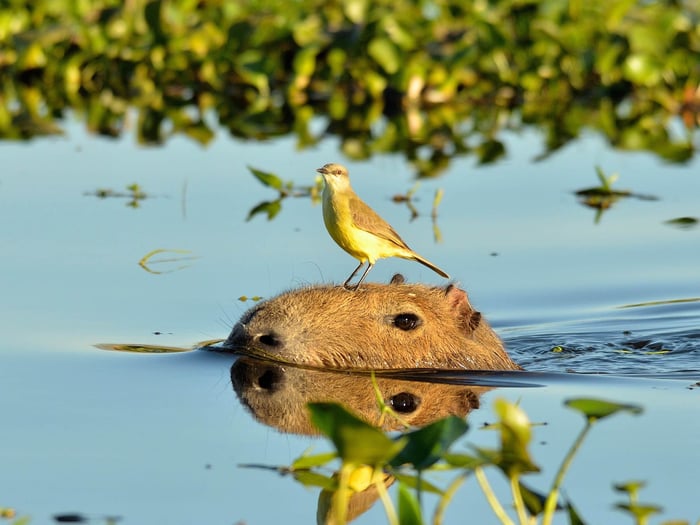

If you've spent any time on social media recently, chances are you've come across a capybara. Whether it's calmly soaking in a hot spring with oranges balanced on its head, making unlikely friends with birds and monkeys or simply looking completely unbothered by the world around it, these gentle giants have become one of the internet's biggest wildlife stars. But the real magic begins when you see capybaras in Latin America, where they roam freely through wetlands, rivers and rainforests as part of some of the continent's richest ecosystems.
As International Capybara Day arrives on 10 July, there's never been a better time to celebrate these remarkable animals. While millions know them through viral videos and memes, travellers to Latin America have the chance to experience something far more memorable: watching capybaras in the wild as they graze peacefully beside rivers, swim effortlessly through wetlands and live alongside some of the continent's most iconic wildlife.
If you're wondering what all the fuss is about, here's everything you need to know about capybaras in Latin America, why they've become one of 2026's biggest wildlife trends and where you can see them for yourself.
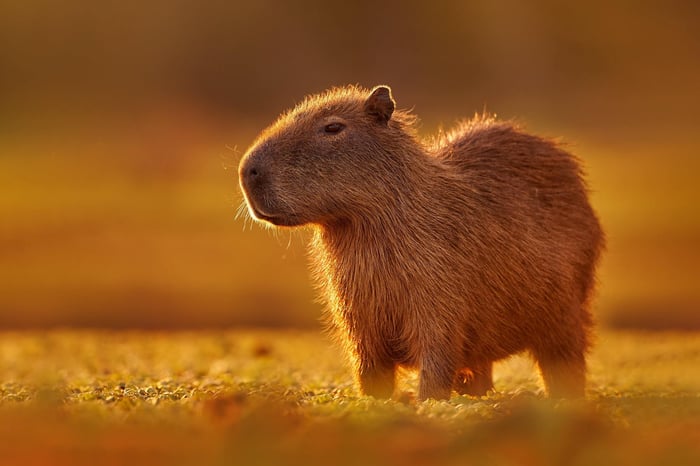
Meet the world's largest rodent
Despite their cuddly appearance, capybaras are, perhaps surprisingly, rodents. In fact, they're the largest rodents on Earth, growing to over a metre in length and weighing as much as 65kg.
They're closely related to guinea pigs, although seeing one standing beside a river makes that family resemblance rather difficult to imagine.
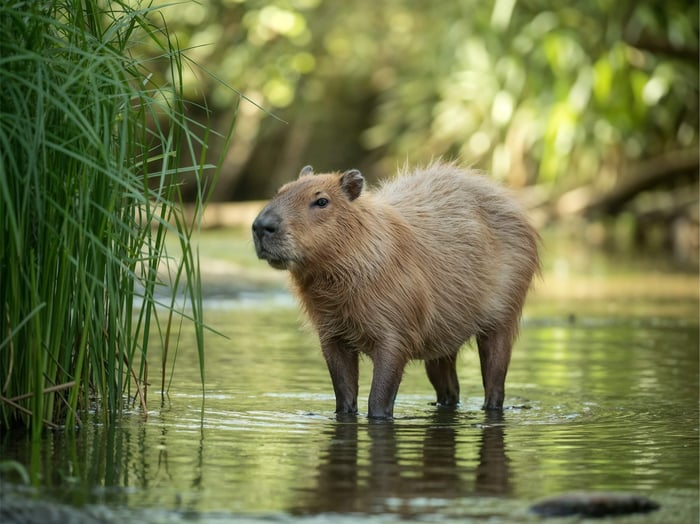
Capybaras are built for life around water. Their slightly webbed feet make them excellent swimmers and they can remain underwater for up to five minutes, using rivers and lagoons as both a refuge from predators and a place to cool down during the heat of the day.
Unlike many mammals, capybaras are incredibly social. They usually live in family groups, communicating with whistles, chirps, clicks and surprisingly expressive barks. During the dry season, when water sources become limited, dozens of capybaras may gather together around lakes and rivers, creating some incredible wildlife spectacles.
Capybara quick facts
- They're the world's largest rodent.
- Adults can weigh up to 65kg.
- They're native to South America.
- They spend much of their lives in and around water.
- Their teeth never stop growing.
- Babies are known as pups.
- They're herbivores, feeding mainly on grasses and aquatic plants.
- They're excellent swimmers and can sleep while partly submerged in water.
Why has everyone fallen in love with capybaras?
Some animals become famous because they're powerful. Others because they're rare.
Capybaras have become famous simply because they're wonderfully relaxed.
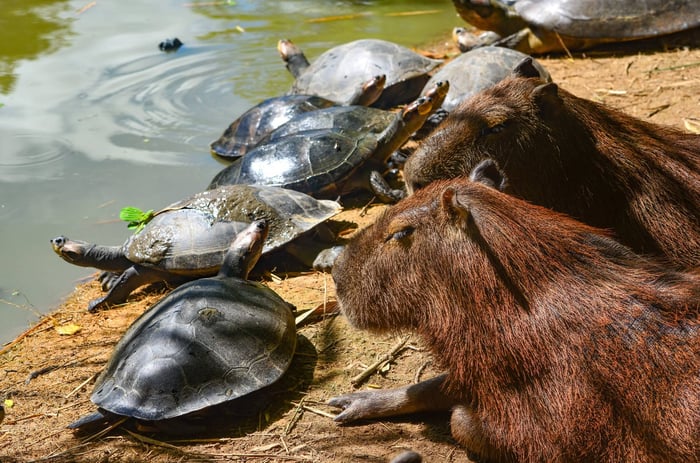
It's almost impossible to scroll through social media without seeing one peacefully sharing its space with another animal. Birds perch on their backs, butterflies gather around them, turtles climb over them and monkeys seem perfectly happy to treat them as part of the furniture.
Even in the wild, capybaras have an extraordinary ability to coexist with the world around them. Their calm nature has earned them nicknames such as nature's therapist and the internet's chillest animal, and it's easy to understand why.
Of course, social media only tells part of the story.
Seeing capybaras in Latin America offers something completely different. Rather than a carefully edited clip, you experience them as part of a thriving ecosystem where every species has its role to play. Watching a family emerge quietly from the reeds at sunrise or glide silently across a wetland is one of those simple travel moments that often becomes a favourite memory.
Latin Routes Travel Specialist Tip
'Everyone heads out hoping to spot jaguars or giant otters, but capybaras often become the unexpected highlight. There's something incredibly peaceful about watching them simply go about their day alongside so many other animals.' - Jessica Dennison, Company Director
Where can you see capybaras in Latin America?
One of the best things about planning a wildlife holiday is that capybaras in Latin America aren't confined to one destination. They can be found across much of northern and central South America, although some places offer particularly memorable encounters.
Brazil's Pantanal – the ultimate capybara destination
If there's one place that immediately springs to mind when thinking about capybaras in Latin America, it's The Pantanal.
Covering an area larger than England, this vast tropical wetland is one of the greatest wildlife destinations on Earth. Rivers, lagoons and floodplains create the perfect habitat for enormous numbers of capybaras, meaning sightings are almost guaranteed.
Early morning boat trips often reveal families grazing peacefully along the riverbanks before slipping into the water as the day warms up. Wildlife drives frequently bring you within easy viewing distance, making the Pantanal one of the best places in the world to photograph capybaras behaving naturally.
'One of my favourite things about the Pantanal is that it encourages you to slow down. Watching capybaras grazing while birds forage around them perfectly captures what makes this extraordinary ecosystem so special. It's a reminder that some of the best wildlife moments are also the quietest.' - Lewis FreethOf course, they're only part of the story.
The Pantanal is also famous for jaguars, giant otters, giant anteaters, hyacinth macaws, jabiru storks, caiman and hundreds of other bird species. It's this remarkable concentration of wildlife that makes every outing feel like a safari.
Argentina's Iberá Wetlands
Overshadowed by Patagonia and Iguazú Falls, the Iberá Wetlands remain one of Argentina's best-kept secrets.
This vast network of marshes, lakes and grasslands has become one of South America's great conservation success stories, with wildlife flourishing thanks to ambitious rewilding projects.
Boat excursions glide quietly through narrow waterways where capybaras are often seen resting on grassy banks or swimming effortlessly between floating vegetation. They're wonderfully accustomed to their surroundings, allowing visitors plenty of time to simply observe rather than chase sightings.
Alongside capybaras, you might also encounter marsh deer, yacaré caiman, howler monkeys and an astonishing variety of birdlife.
For travellers looking for peaceful wildlife experiences away from the crowds, Iberá is hard to beat.
Guyana – one of Latin America's wildlife secrets
While Brazil often steals the spotlight, Guyana quietly offers some of the continent's richest wildlife experiences.
The Rupununi savannahs and wetlands provide ideal habitat for capybaras in Latin America, with sightings often accompanied by giant river otters, giant anteaters, black caiman and colourful birdlife.
One of the joys of travelling in Guyana is just how untouched it feels. Days can pass without seeing another visitor, allowing wildlife encounters to feel wonderfully authentic.
For nature lovers seeking somewhere a little different, Guyana deserves a place high on the list.
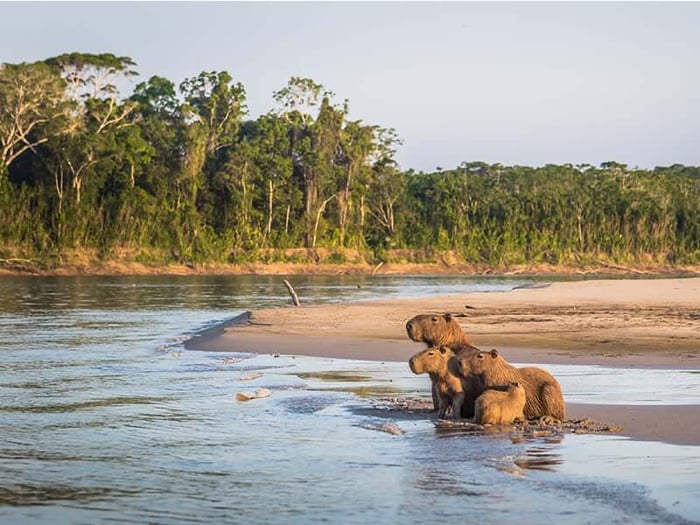
The Amazon – where capybaras share the waterways with incredible wildlife
The Amazon is often thought of as dense rainforest stretching endlessly to the horizon, but some of its most memorable wildlife encounters happen on the water. Travelling by riverboat or exploring by canoe allows you to experience a completely different side of the rainforest, where every bend in the river reveals something new.
Across the Peruvian, Ecuadorian and Brazilian Amazon, capybaras in Latin America are often spotted along riverbanks, quietly grazing on fresh vegetation or cooling off in the shallows. They may not be as numerous as in the Pantanal, but seeing them against a backdrop of towering rainforest feels every bit as special.
The beauty of an Amazon wildlife experience is that one sighting naturally leads to another. While searching for capybaras, you could also encounter playful giant river otters, troops of squirrel monkeys, three-toed sloths, colourful macaws, black caiman and, if you're particularly fortunate, the elusive pink river dolphin.
No two days in the Amazon are ever quite the same, and that's exactly what makes it such a rewarding destination for wildlife enthusiasts.
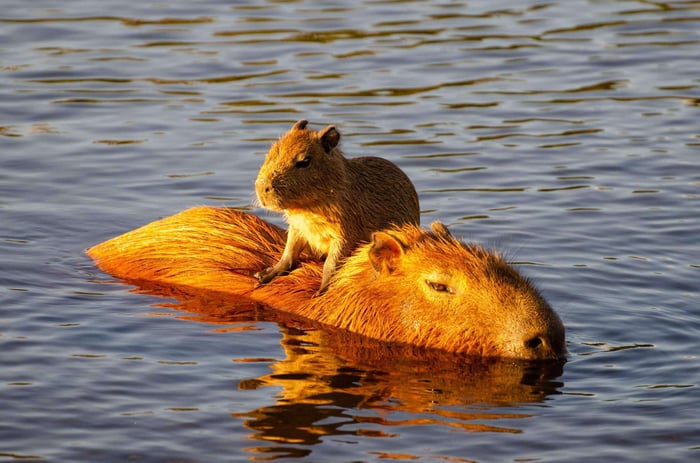
Why seeing capybaras in the wild is so different from watching them online
There's no denying that social media has helped make capybaras famous. Millions of people have smiled at videos of them relaxing with ducks, sharing space with monkeys or calmly wandering through parks.
But those clips only capture a tiny part of their story.
Seeing capybaras in Latin America in their natural habitat offers a much deeper appreciation of these remarkable animals. Rather than being the centre of attention, they're simply another important part of a thriving ecosystem.
Sit quietly beside a wetland and you'll notice how everything seems connected. Birds search for insects around grazing capybaras. Caiman drift silently nearby. Dragonflies skim across the water while herons patiently stalk fish in the reeds. The capybaras simply carry on grazing, completely at ease in an environment they've called home for thousands of years.
It's a reminder that some of the best wildlife experiences aren't dramatic. Sometimes they're wonderfully peaceful.
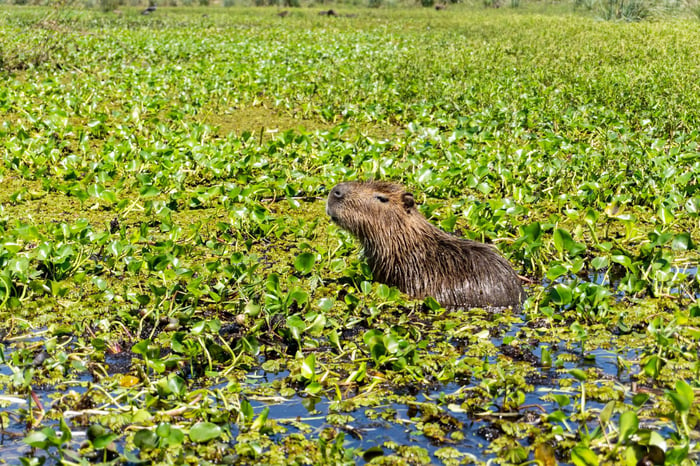
Wildlife watching tips for spotting capybaras
One of the reasons travellers love capybaras in Latin America is that they're often easier to observe than many other mammals. They're naturally curious without being overly cautious, making them fantastic subjects for wildlife photography.
A few simple tips can make your sightings even better:
- Head out early. Dawn is often the best time to see capybaras feeding before the heat of the day.
- Look near water. Rivers, lakes, marshes and lagoons are their favourite places to spend time.
- Stay quiet and be patient. Capybaras are generally relaxed, but keeping noise to a minimum helps them behave naturally.
- Bring binoculars. Even when they're close, binoculars let you appreciate their behaviour without disturbing them.
- Trust your guide. Experienced naturalist guides know where wildlife is most active and can point out fascinating behaviours you might otherwise miss.
Latin Routes Travel Specialist Tip
'One of my favourite things about wildlife watching is slowing down. It's easy to focus on finding the next big sighting, but spending ten minutes quietly watching a family of capybaras often becomes one of the most memorable moments of the day.'

More than just a social media sensation
Capybaras may have found fame online, but they've been quietly winning over travellers for decades.
Perhaps it's because they represent everything people love about wildlife holidays in Latin America. They're approachable without ever being tame, familiar yet completely unique and happiest when simply being themselves.
Better still, they're often part of much bigger wildlife experiences.
A holiday that includes capybaras in Latin America could also bring encounters with jaguars in Brazil's Pantanal, giant river otters in Guyana, colourful macaws in the Amazon or yacaré caiman in Argentina's Iberá Wetlands. Every destination offers its own combination of landscapes, ecosystems and unforgettable wildlife moments.
It's this incredible biodiversity that makes Latin America one of the world's greatest destinations for nature lovers.
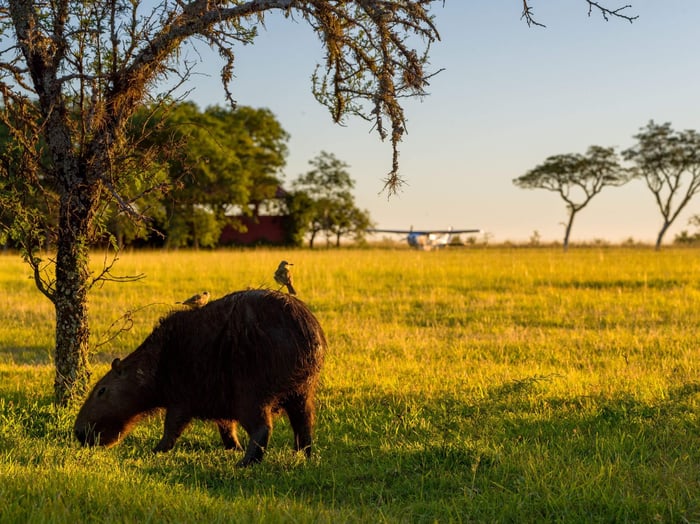
Celebrate International Capybara Day by seeing them where they belong
International Capybara Day on 10 July is the perfect excuse to celebrate one of Latin America's most charismatic animals. Whether you've discovered them through a viral video, fallen for their wonderfully relaxed personalities or simply love spotting wildlife in its natural habitat, capybaras are guaranteed to leave a lasting impression.
The best part is that they're rarely the only highlight. A holiday centred around capybaras in Latin America opens the door to some of the continent's most spectacular natural environments, from the flooded plains of Brazil's Pantanal to the winding waterways of the Amazon and the peaceful wetlands of Argentina.
If you're planning your next wildlife adventure, our Travel Specialists can help you create a truly individual holiday that brings you closer to Latin America's extraordinary wildlife, landscapes and unforgettable experiences.